NFAC Transducer Adaptor PCB
A low-cost adaptor board for a NASA wind tunnel data acquisition system.
| Where | National Full-Scale Aerodynamics Complex, NASA Ames Research Center |
|---|---|
| When | 2026 |
| Tools | KiCad, hand-built footprints and 3D models |
| Outcome | Roughly two channels recovered per amplifier board, across several hundred boards in the facility DAS |
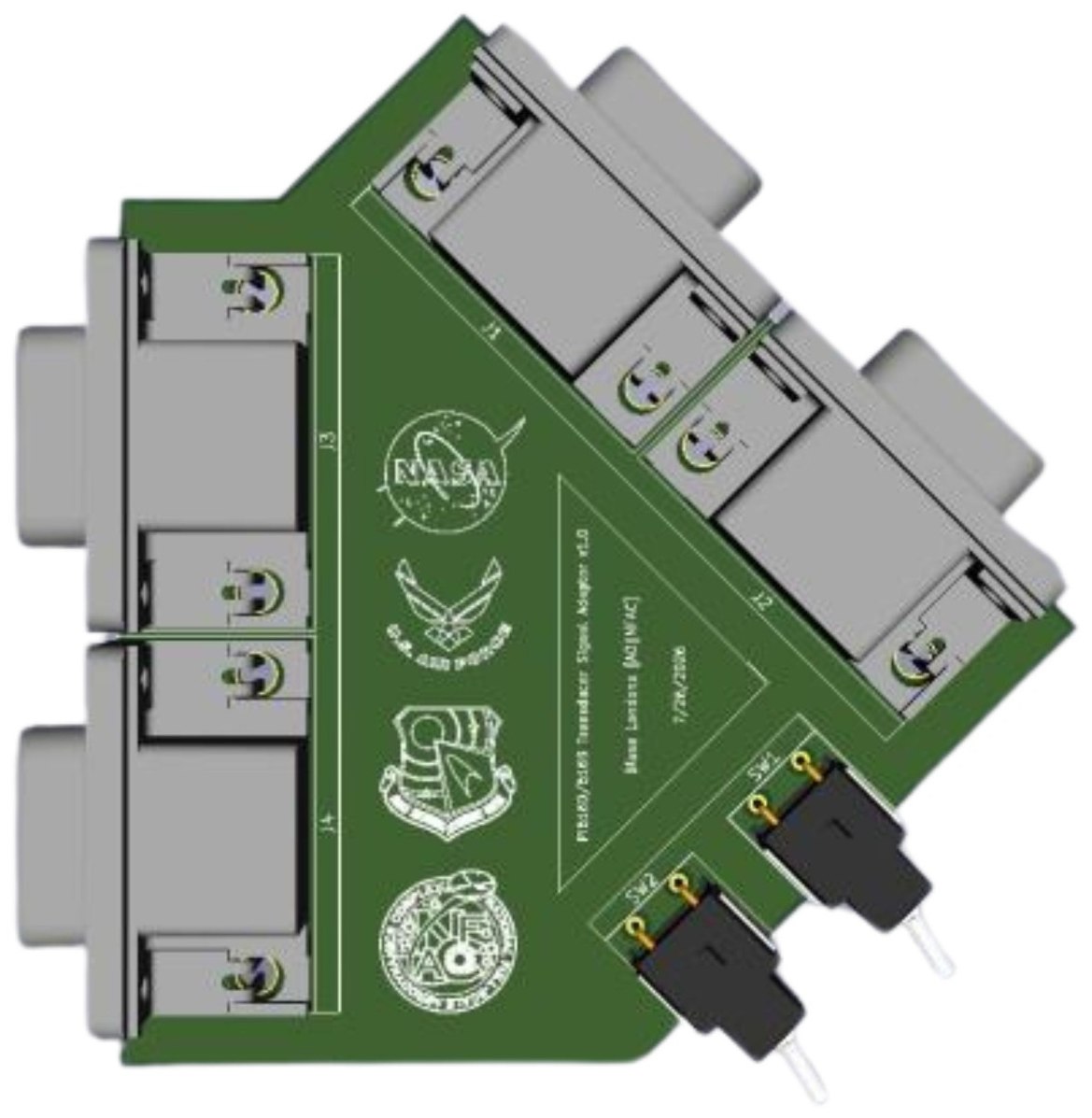
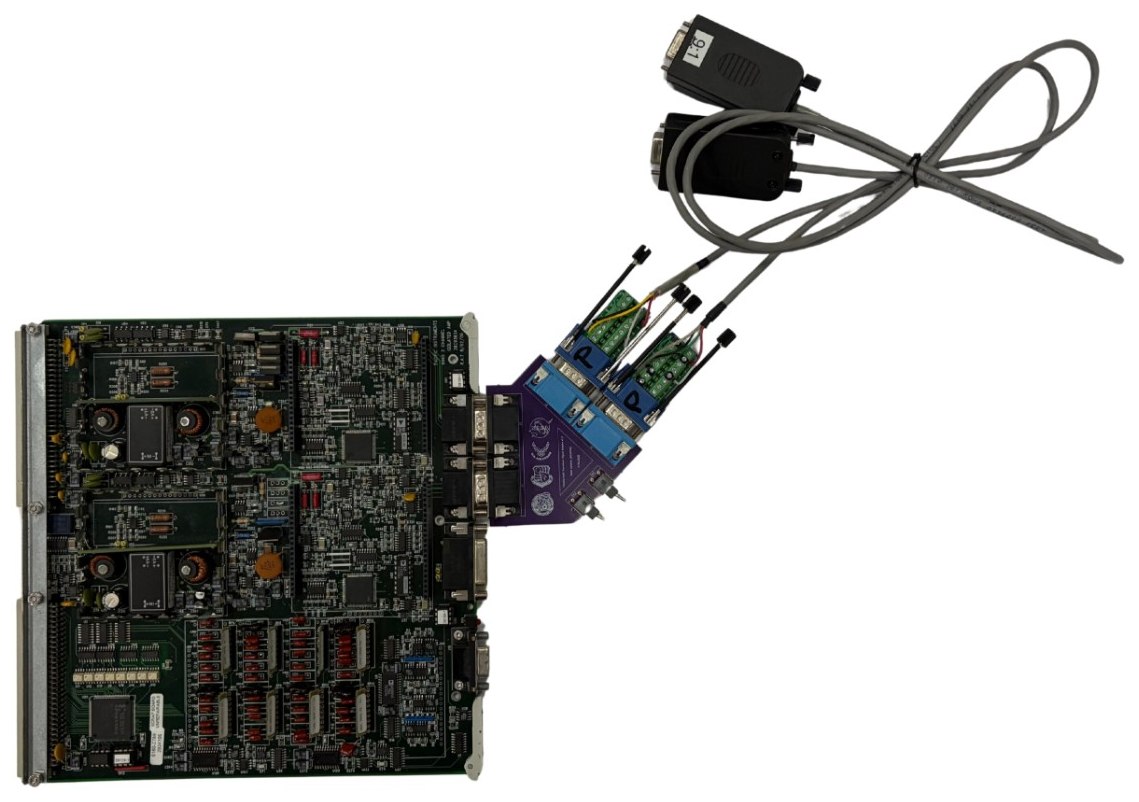
NFAC’s data acquisition system routes strain gauge signals through Pacific Instruments amplifier boards, which only work when the excitation common sits within a 10 V window of both signal legs. A transducer grounded off facility common sometimes violates that condition and clips the output. Replacing the amplifiers wasn't realistic, as the boards are pretty old and hard to source (also, there's just a lot of them). Thus, the facility team asked me to design an adaptor that would fix the clipping instead.
I found the problem documented in a six-year-old facility worknote and used it to design a small board in KiCad that ties the excitation common to the negative signal leg, satisfying the 10 V condition trivially. The work happened on airgapped machines with no internet access, so every footprint and 3D model was built by hand from datasheets and drawings.
Each adaptor recovers roughly two channels per amplifier board, and there are several hundred boards across the facility DAS.